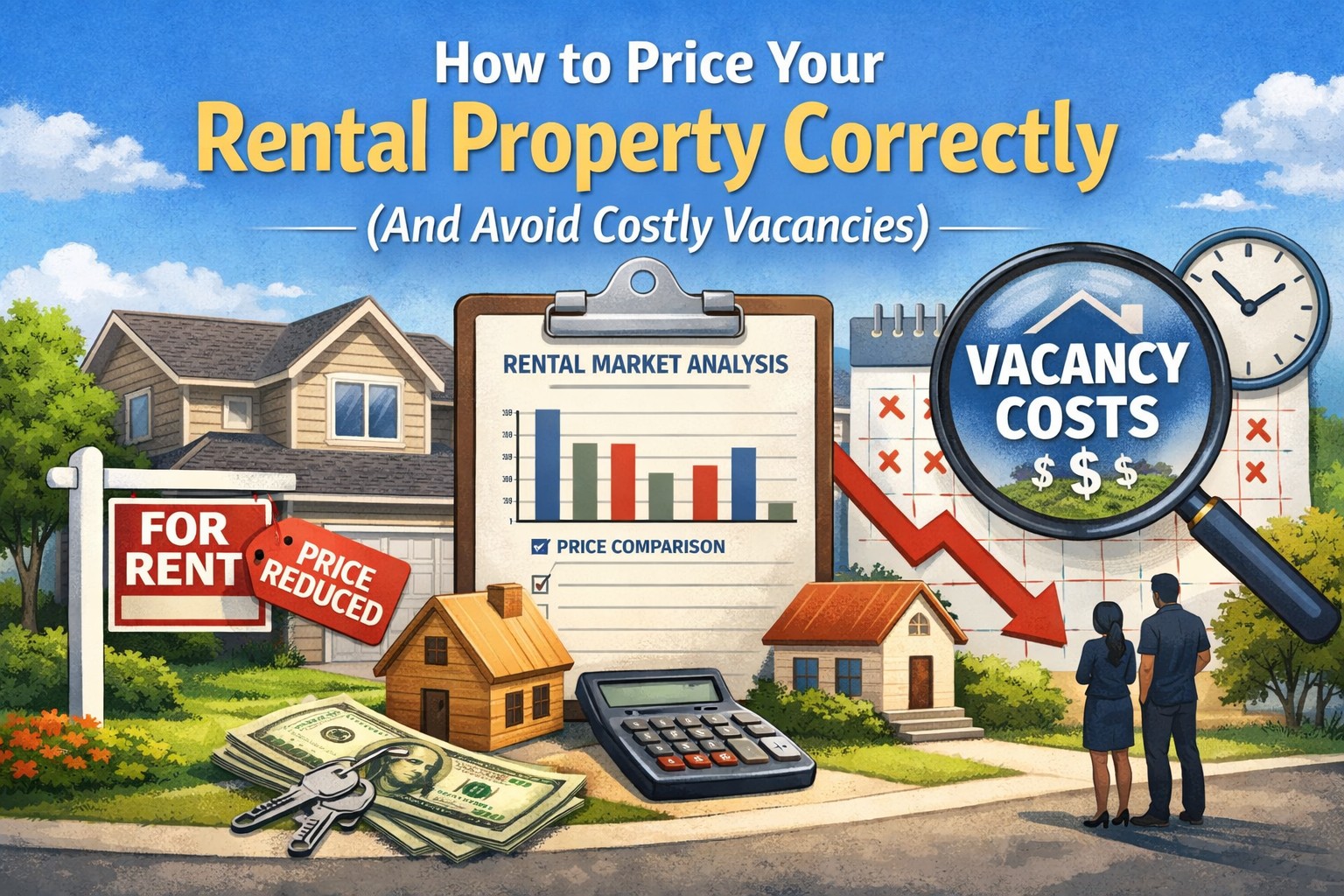
Setting the right rental price is one of the most critical decisions a property owner can make. Price too high, and your property sits vacant. Price too low, and you leave money on the table. The goal isn’t simply to charge the highest rent possible — it’s to optimize occupancy, reduce turnover, and maximize net operating income over time.
Here’s how to approach rental pricing strategically and avoid costly vacancies.
1. Understand True Market Rent (Not Just Asking Prices)
Many landlords make the mistake of pricing their home based solely on active listings. However, asking rent and achieved rent are not the same.
Instead, focus on:
Recently leased comparable properties (not just those currently available)
Similar square footage
Comparable bedroom/bath count
Similar condition and upgrades
Equivalent neighborhood and school district
Garage, yard, or amenity differences
If three comparable homes leased at $2,500 after starting at $2,650, the market has already spoken. Market rent is what tenants are willing to sign for — not what owners hope to receive.
2. Factor in Condition and Presentation
Tenants compare properties online before ever scheduling a tour. A home with:
Updated flooring
Fresh interior paint
Modern fixtures
Professional photography
will command more attention and potentially higher rent than a dated property priced the same.
Pricing must align with presentation. If your property is average for the area, pricing at the top of the range will likely increase days on market.
3. Calculate the Cost of Vacancy
Many owners overprice a property by $100–$200 per month thinking they can “always lower it later.” But even a short vacancy can erase that potential gain.
For example:
Rent priced at $2,700 but sits vacant for 30 days
Alternative: $2,550 and leased in 7 days
That 30-day vacancy costs approximately one full month of rent — far more than the incremental monthly increase would have earned over the year.
Vacancy is typically more expensive than slightly underpricing.
A faster lease-up often results in:
Lower marketing costs
Less showing fatigue
Reduced carrying costs (mortgage, utilities, HOA)
Less risk of attracting unqualified applicants
4. Watch Seasonal Timing
Rental demand fluctuates throughout the year.
Late spring and summer: Higher demand, stronger pricing power
Late fall and winter: Slower traffic, longer days on market
If your property becomes vacant in December, aggressive pricing may be necessary to secure a qualified tenant quickly. Waiting for “spring pricing” while carrying winter vacancy can be a costly gamble.
5. Monitor Days on Market Closely
The first two weeks are critical. If showings are minimal and applications are not coming in, the market is signaling resistance.
Key indicators pricing may be too high:
Few or no showings
High showing traffic but no applications
Prospective tenants commenting on price
Price adjustments early are strategic. Waiting 30+ days before correcting can create the perception that something is wrong with the property.
6. Consider Tenant Quality, Not Just Rent Amount
The highest rent offer is not always the best long-term outcome. Overpricing can:
Narrow your applicant pool
Attract desperate applicants stretching beyond their budget
Increase risk of late payments or turnover
A well-qualified tenant at slightly lower rent often produces stronger long-term financial performance through:
On-time payments
Longer tenancy
Better property care
7. Review Local Inventory Weekly
Markets shift quickly. Interest rates, job growth, and new housing inventory all influence rental demand.
Make it a practice to:
Review active competition weekly
Track price reductions
Monitor absorption rates
Adjust proactively if inventory spikes
Rental pricing is not “set and forget.” It requires ongoing market awareness.
8. Work Backward From Your Financial Goals
Understand your numbers:
Mortgage payment
Taxes and insurance
HOA dues
Maintenance reserves
Management fees
While the market ultimately determines rent, you should know your break-even point and desired cash flow. If the market rent is below your financial target, that becomes a strategic decision — not a pricing mistake.
The Bottom Line
Correct rental pricing is about positioning, not guessing.
The right price:
Generates strong initial interest
Minimizes vacancy
Attracts qualified tenants
Protects long-term ROI
Overpricing typically costs more than slightly underpricing. The objective isn’t maximizing rent for one month — it’s maximizing performance across the entire lease term.
If you're unsure where your property should be positioned, a professional market analysis can provide clarity before costly vacancy sets in.