In property management, communication is not a soft skill — it is an operational tool that directly impacts occupancy rates, maintenance outcomes, owner satisfaction, and tenant retention.
Many of the issues that arise between owners and tenants are not rooted in negligence or bad intent. They stem from misunderstandings, unclear expectations, delayed responses, or inconsistent information. When communication is structured, proactive, and professional, problems are minimized before they ever escalate.
At its core, strong communication creates alignment. And alignment creates stability.
Why Communication Matters More Than Most Owners Realize
Rental properties are dynamic environments. Maintenance requests, inspections, lease renewals, rent collection, vendor coordination, and compliance requirements are constantly in motion. Without clear communication protocols, this motion turns into confusion.
When communication is poor, the results are predictable:
Tenants feel ignored or frustrated
Owners feel out of the loop or uncertain
Small maintenance issues become expensive repairs
Negative reviews appear online
Turnover increases
When communication is strong, the opposite occurs:
Tenants feel heard and respected
Owners feel informed and confident
Issues are addressed early and efficiently
Trust is built on both sides
Long-term tenancy becomes the norm
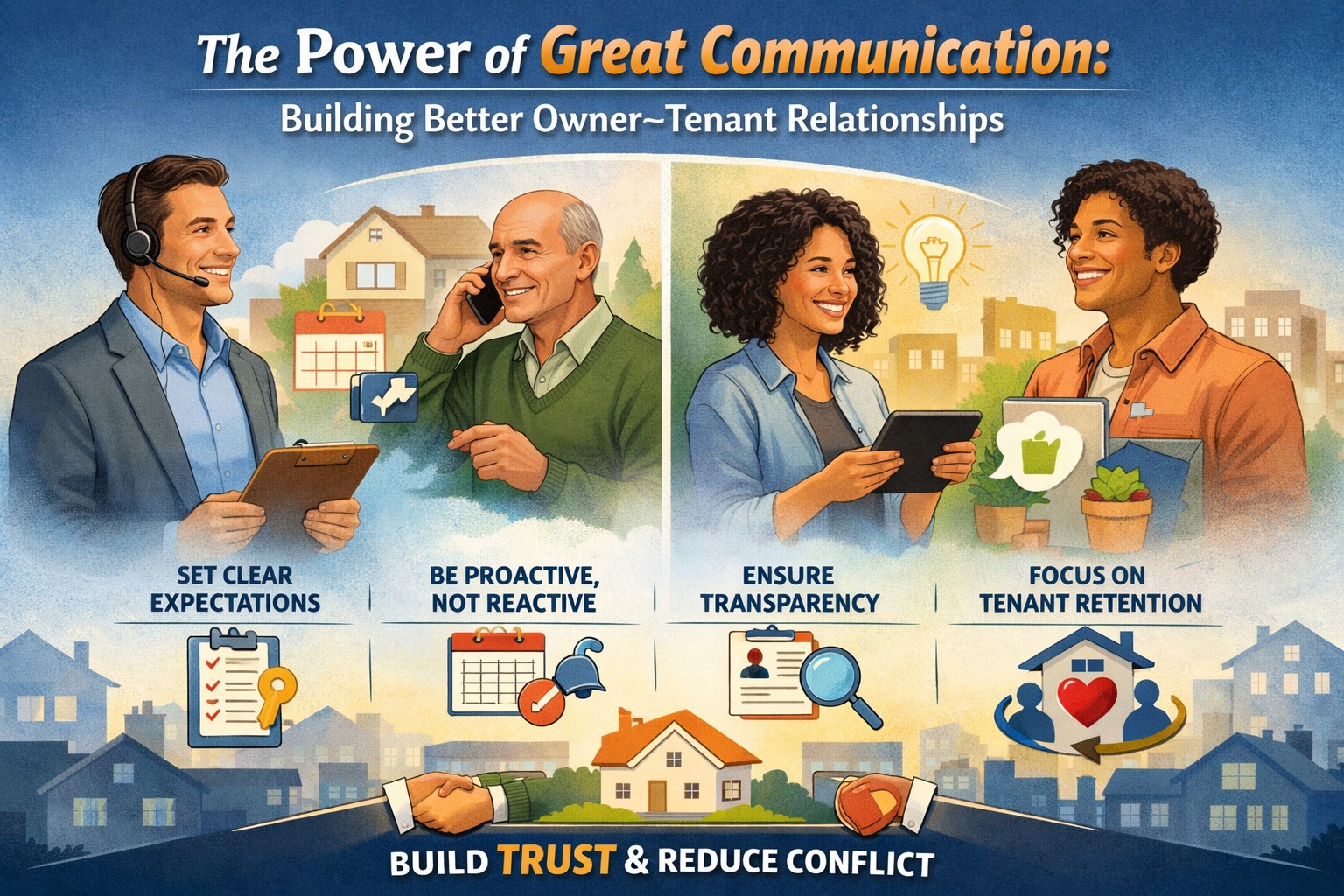
Setting Expectations from Day One
The most effective communication begins before a tenant ever moves in.
Clear lease explanations, maintenance procedures, rent policies, and inspection schedules eliminate ambiguity. Tenants who understand what to expect are far less likely to misinterpret situations later.
Likewise, owners who understand the communication cadence from their property manager know when they will be updated and what information they will receive. This prevents the common concern of, “I haven’t heard anything — is something wrong?”
Predictability builds trust.
Proactive vs. Reactive Communication
One of the biggest differentiators between average and excellent property management is whether communication is reactive or proactive.
Reactive communication happens after a problem has occurred.
Proactive communication prevents the problem from occurring in the first place.
Examples of proactive communication include:
Notifying tenants of upcoming inspections well in advance
Updating owners before they have to ask about a repair
Following up after maintenance is completed
Reminding tenants of seasonal responsibilities (filters, landscaping, winterizing, etc.)
Providing owners with routine performance updates on their property
This approach dramatically reduces friction and eliminates surprises.
The Role of Transparency
Owners want visibility. Tenants want clarity.
Transparency in communication means:
Sharing maintenance details, photos, and invoices with owners
Clearly explaining timelines to tenants
Documenting inspections and property conditions
Being honest about delays, costs, or challenges
When everyone understands what is happening and why, confidence replaces frustration.
Communication and Tenant Retention
Tenants rarely leave solely because of rent increases. They leave because they feel unheard, undervalued, or frustrated by how issues were handled.
A tenant who receives prompt responses, respectful communication, and clear updates is far more likely to renew their lease — even if rent increases.
Retention is not just about pricing. It is about experience.
And experience is driven by communication.
Communication as Risk Management
Poor communication is one of the leading contributors to disputes, complaints, and even legal issues in rental properties.
Documented, professional communication protects:
The owner’s asset
The tenant’s rights
The property manager’s liability
When expectations, requests, approvals, and timelines are clearly recorded, misunderstandings have far less room to grow.
How Professional Property Management Elevates Communication
Managing communication between owners and tenants is time-consuming and nuanced. It requires:
Neutral, professional tone
Timely follow-ups
Consistent documentation
Experience in conflict resolution
Understanding of legal and lease obligations
This is where professional property management becomes invaluable. A skilled management team acts as a communication bridge, ensuring both parties feel heard while keeping interactions productive and compliant.
Owners do not have to field late-night messages. Tenants do not feel ignored. Everything flows through a structured, professional system.
The Bottom Line
Great communication is not just about being responsive. It is about being intentional, consistent, and proactive.
When communication is done well:
Owners have peace of mind
Tenants have a better living experience
Properties are better maintained
Relationships are stronger
Investments perform better
In property management, communication is the foundation that everything else is built on.